The Legal Workshop (2005)
Note: for confidentiality reasons, parts of
the interfaces have been obfuscated.
Process
The project was to develop a custom framework that would allow any number of tools to be created by independent development teams. These teams might not know about the existence of other tools, but the tools would still all need to have a coherent look and feel, and to be fully integrated with each other. The original framework and base toolset had gone through several revamps by the time I was brought onto the project. At the time it was a fairly simple Java/SWT application. Few requirements were stated other than it had to stay as a desktop application. |
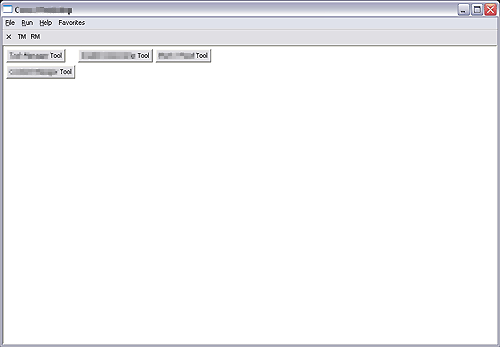
The first step was to find out if a desktop application was even the right metaphor. In a focus group, the users were introduced to the several different metaphors and ended up sticking with the desktop.
I then helped lead the users through a requirements gathering process, which resulted in several hundred requirements. A vision document and a UI guidelines document were then created to help establish the redevelopment efforts, and to ensure a coherent look and feel.
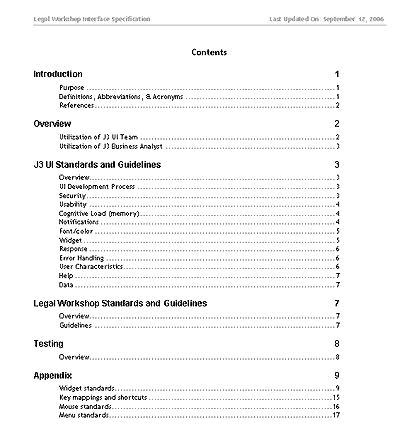
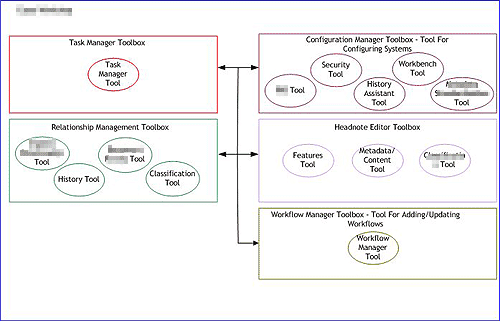
I directed the UI team to redevelop the base architecture to ensure that the vision and project requirements could be met, and also developed quick paper and computer-based prototypes of the main interface and supplemental interfaces. Several iterations of the main interface were created to develop the final look and feel.
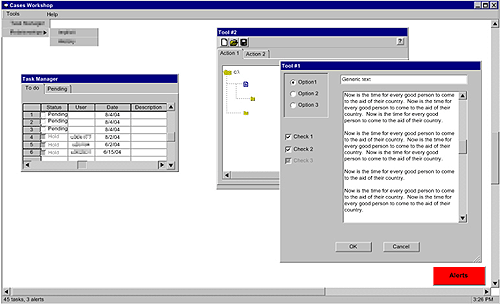
The users liked portions of the initial interface, but decided that they wanted to have some content that could be kept on the screen at all times, but did not need to stay there. They wanted to make sure that the menu functionality was kept, as well as the ability to open up multiple tools and choose where they were positioned.
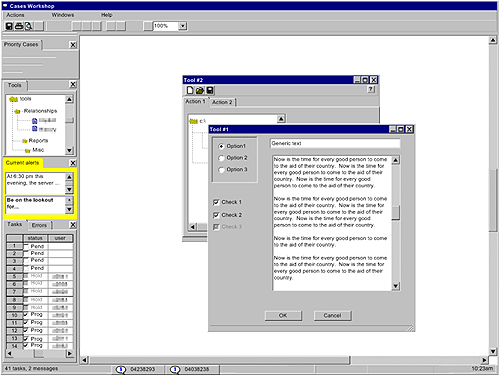
The final prototype allowed the users to get the information that they needed from multiple interfaces at once glance, and to customize the interface so that they could work on multiple tasks or tools simultaneously. It also allowed them to find out about any critical information in real time, to run multiple sessions and to have easy access to everything that they would need. The panels on the right-hand side could be customized, and even hidden, if they needed to capture more screen real-estate. They also had the ability to work on several sessions at once, as is indicated through the graphics at the bottom of the screen.
Additional work was also done to establish other parts of the interface. For example, each and every tool had configuration options. I wanted to establish a consistent mechanism that would allow users to configure all tools together, using natural mechanisms as often as possible.
The configurations for all tools were worked into a single interface. This interface was responsible for querying all tools that the user had access to, and providing a single interface based upon the parameters within the tools.
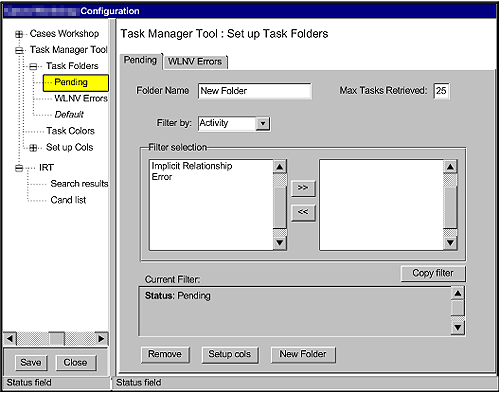
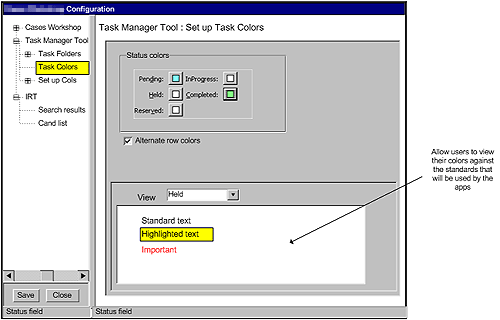
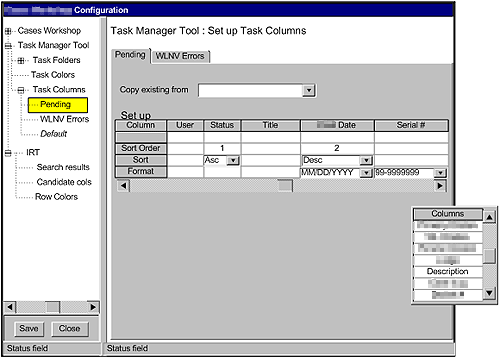
The final interface is still in the process of being developed, and is expected to be released in part over the next few years. A significant percentage of it is being developed as part of the History Tool project.